
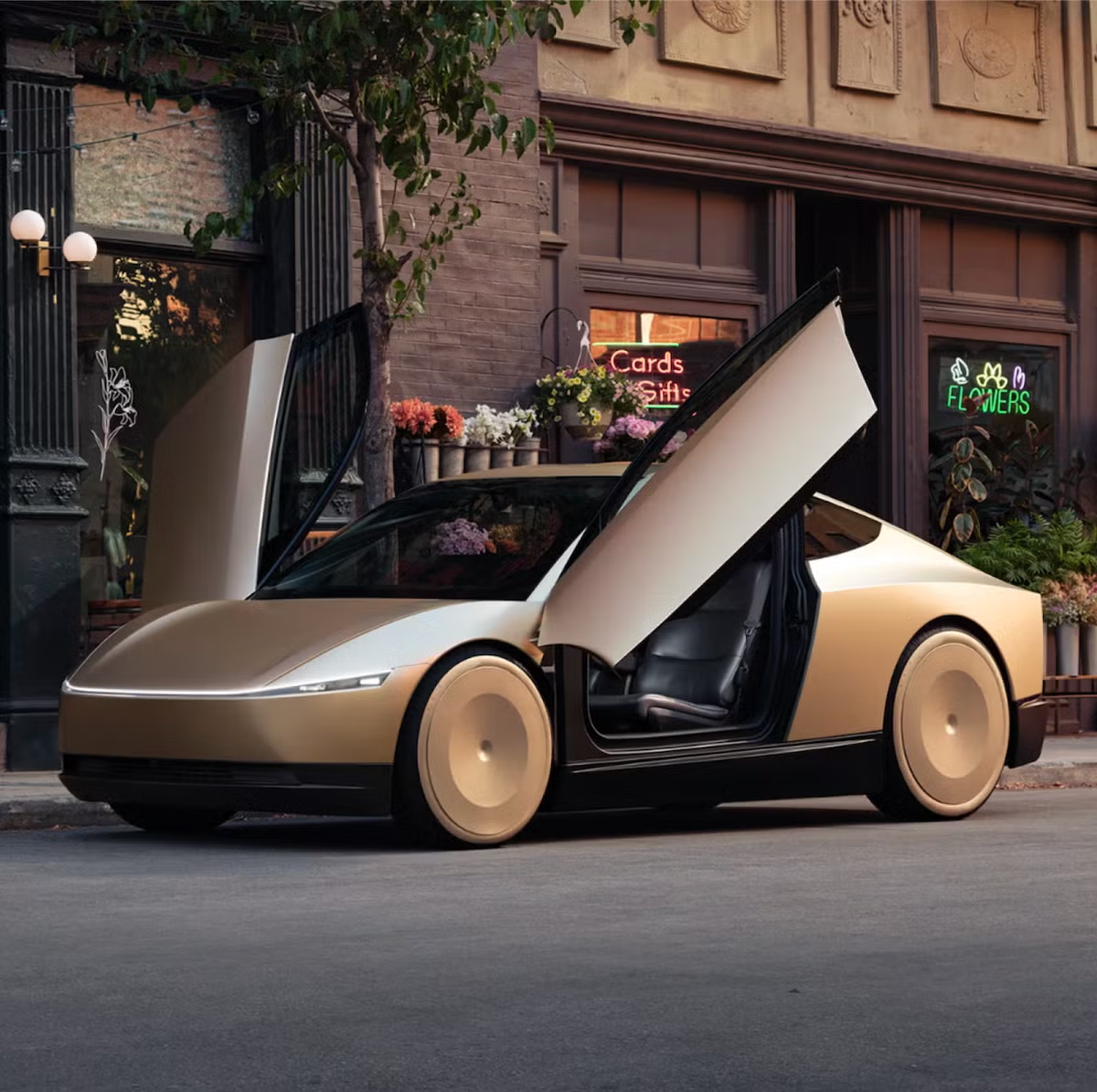
On April 22, 2019, Tesla held its now-famous Autonomy Day event. During the presentation, Elon Musk and his team didn’t just talk about Full Self-Driving hardware—they laid out the vision for the Tesla Network, a robotaxi platform that would let owners send their cars out to earn money autonomously.
What many people missed that day was how fundamentally different Tesla’s business model would be from Uber, Lyft, Waymo, etc. Tesla wasn’t entering the rideshare market as another software layer on top of someone else’s cars. They were building a vertically integrated robotaxi empire with structural cost advantages that are almost impossible for competitors to match.
Here are the biggest reasons Tesla is uniquely positioned to dominate this market.
1. Tesla Owns the Cars (and Makes Them at Cost)
Traditional rideshare companies don’t own the vehicles on their platforms. They rely on independent drivers or fleet operators who buy cars from manufacturers. Those manufacturers (Toyota, GM, Hyundai, etc.) mark up every vehicle to make a profit.
Tesla manufactures its own vehicles. When the Tesla Network launches, Tesla can simply allocate cars to the fleet at cost—no dealer margins, no middlemen.
Advantage: Instant scale, zero acquisition markup.
2. 100% Electric = Dramatically Lower Operating Costs
Energy and maintenance are two of the largest expenses for any rideshare fleet.
– Energy: Tesla owns and manufactures the Supercharger network. They can prioritize robotaxi charging, adjust pricing internally, and essentially “give themselves” electricity at cost. Competitors using third-party charging networks (Electrify America, EVgo, etc.) will pay retail rates + profit margin to the network owner.
– Maintenance: Electric vehicles have far fewer moving parts than ICE or even hybrid vehicles. No oil changes, no transmission issues, no exhaust system repairs. And because Tesla runs its own in-house service centers and manufactures its own parts, they can service the fleet at true cost—again, no third-party markup.
3. Tesla Insurance Could Slash Another Major Cost
Insurance is one of the biggest line items for rideshare companies today. Tesla has been rolling out its own insurance product that uses real-time driving data from the car itself.
When the fleet is 100% Tesla-owned (or Tesla-controlled) robotaxis with perfect sensor data and no human driver error, actuarial risk drops dramatically. Tesla can self-insure or offer insurance to the network at a fraction of what traditional insurers would charge.
4. Instant Supply: Hundreds of Thousands of Cars, Overnight
Uber and Lyft spent years subsidizing drivers to build supply. Waymo and others are still slowly manufacturing or retrofitting small fleets.
Tesla can flip a software switch and activate every vehicle built from late 2016 onward with the right hardware (essentially every car with HW3 or later). That’s millions of potential robotaxis worldwide, with hundreds of thousands ready on day one.
No other company can scale supply that fast.
5. No Human Drivers = No Revenue Split
The single largest cost in today’s rideshare model is the human driver, who takes 70–80% of every fare.
When the car drives itself, Tesla keeps nearly 100% of the revenue (minus small platform fee to owners who opt in). That alone turns the economics of rideshare upside down.
The Bottom Line
Tesla isn’t just building another ride-hailing app. They’re building a vertically integrated, zero-driver, all-electric robotaxi network where they control (and produce at cost):
– The vehicles
– The charging infrastructure
– The parts and service
– The insurance
– The software
Every other player in the space is forced to pay retail (or more) for most of those items.
When Autonomy Day happened in 2019, this vision sounded like sci-fi.
Six years later, with FSD progressing rapidly and regulatory hurdles slowly clearing, it’s starting to look like Tesla wrote the playbook no one else can copy.
The robotaxi wars won’t be won by the best app.
They’ll be won by the company with the lowest cost per mile.
And right now, Tesla’s cost structure looks unmatchable.